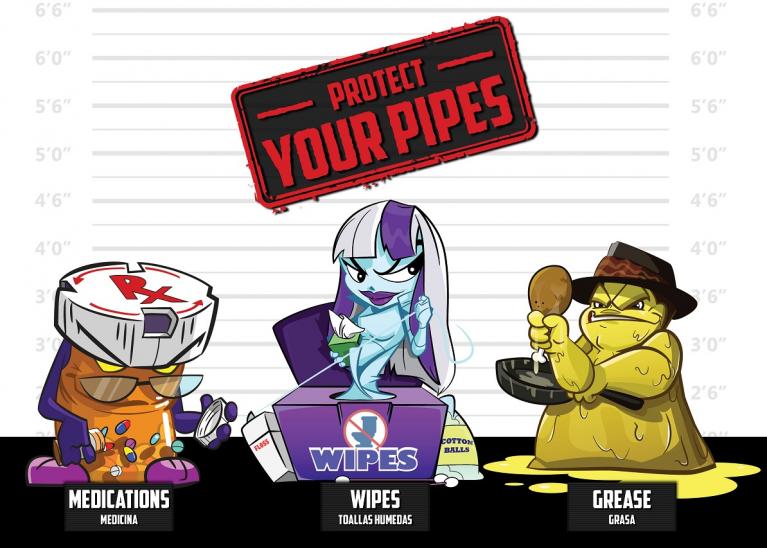
The improper disposal of fats, oils, and grease (FOG) and “flushable” wipes in the sink and toilet causes expensive residential and commercial plumbing problems. FOG builds up in sewer pipes, restricts wastewater flow and can eventually block the pipe. This causes untreated wastewater to back up into homes and businesses and can cause manholes to overflow raw sewage into the street. This sewage can enter storm drains and contaminate local waters. The clean-up of sewer backups and the maintenance required to reverse the damage caused by the improper disposal of these items leads to higher utility bills, costly home plumber visits and expensive pipe replacement. Learn more at ProtectYourPipes.org.
You can save your sink
Food and grease should never go down the sink. Remember the 4 C’s of sink safety: Cool, Contain, Can, Compost:
- Cool: After cooking, allow grease to cool and solidify in the pan.
- Contain: Scrape FOG and excess food scraps into a secure, sealable container like a peanut butter jar. Before washing, wipe down pots and pans with a paper towel.
- Can: Throw the full container of FOG and your paper towel into a trashcan.
- Compost: If possible, compost food and vegetable scraps (don’t compost grease).
Commercial customers
Commercial customers must implement Best Management Practices (BMPs) to minimize the discharge of FOG to the sewer system. This is regulated by Chapter 15 "Discharges to Wastewater System" of Title 21 of the District of Columbia Municipal Regulations (21 DCMR § 1502.18). The following BMPs are recommended:
- Install and maintain a grease abatement system in accordance with the DC Plumbing Code. Keep a record of maintenance.
- Collect and recycle used cooking oil.
- Store and transport cooking oil in covered containers and don't overfill.
- Use drain screens and eliminate greasy food from garbage disposals.
- Scrape or wipe food scraps and oily residue from dishes and cookware prior to washing. Dispose of these food scraps and residue in the trash.
- Properly dispose of hood cleaning wastewater into a drain connected to a grease trap or interceptor.
- Do not use corrosive cleaning products. This may strip metal surfaces causing metals to build up in the grease trap or interceptor and violate DC Water pretreatment standards.
- Place absorbent pads in areas of frequent drips or spills and/or cover floor drains in the vicinity of fryers and griddles.
- Create and use spill kits to remove grease from floors prior to mopping.
- Display kitchen signs or posters with BMPs prominently in the kitchen.
- Train new employees on kitchen BMPs.